Publication Announcement – Making the EU’s 2028-2034 Multiannual Financial Framework Work for Southern Europe

0

PromethEUs | 09/12/2025

The PromethEUs network of think tanks, consisting of IPP Institute of Public Policy – Lisbon (Portugal), I-Com the Institute for Competitiveness (Italy), Elcano Royal Institute (Spain) and LIEE the Laboratory of Industrial and Energy Economics (Greece), is proud to announce its latest joint publication “Making the EU’s 2028-2034 Multiannual Financial Framework Work for Southern Europe”.

The publication was presented on 9 December at the I-Com’s premises in Brussels to policymakers, industry leaders and academics who were taking part in the event. The publication’s core themes are the 2028-2034 Multiannual Financial Framework (MFF) presented by the European Commission and two of its main components: the European Competitiveness Fund and Horizon Europe. All with a special emphasis on southern European perspective.

The publication is divided into four chapters, accompanied by executive summaries and conclusions (with policy insights) for each of them.

Chapter 1 ­– edited by IPP-Lisbon – presents an overall picture of the 2028-2034 MFF and a comparison with the current (2021-2027) cycle, including their components, strengths and weaknesses. The chapter underlines the turning point in EU budgetary governance, marked by fundamental tensions. Questions are raised about feasibility of reforms, implementation capacity, and the balance between European added value and territorial cohesion.

Chapter 2 – edited by I-Com – delves into the European Competitiveness Fund (ECF), exploring its scope, design, adequacy and the characteristics of its components. It raises several considerations regarding the ECF’s strengths, weaknesses and opportunities. Finally, the chapter provides a brief comparison with similar programmes in the US and China.

Chapter 3  – edited by Elcano – analyses the concept of ‘digital leadership’, which has been placed at the centre of Europe’s agenda by the next MFF. The chapter focuses on two elements of the ECF that determine the exercise of control over technological assets, the application of sourcing obligations and the implementation of time-sensitive actions. Finally, it presents the essential elements required to enact these instruments, together with the consequences of not implementing them.

Chapter 4 – edited by LIEE – compares and discusses the two cycles of the EU’s primary R&I programme: Horizon 2020 and Horizon Europe. It is argued herein that, while the EU has successfully cemented its status as a global powerhouse in ‘deep tech’ research excellence, it faces a widening ‘deployment gap’, particularly in southern economies, which can be traced back to the design of Horizon 2020. To conclude, a recalibration of the next MFF that prioritizes diffusion alongside innovation is proposed.

Read more – including conclusions and policy recommendations – by downloading the publication below.

Publication


PromethEUs Conference: Making the 2028-2034 MFF fit for EU Competitiveness

0

On Tuesday 9 December, the PromethEUs Network convened at the Institute for CompetitivenessBrussels office to present its latest study titled: “Making the EU’s 2028-2034 Multiannual Financial Framework Work for Southern Europe“.

The study, structured around four chapters, examinines the proposal for the new EU budget.

Specifically, it compares the current MFF with the previous one, assessing its structure and achievements. It also explores the European Competitiveness Fund and the financing needs of the digital sector to strengthen Europe’s position globally. Lastly, it assesses the Horizon Europe programme to determine whether available funds are adequate to support R&I policies and deliver on Europe’s digital ambitions.

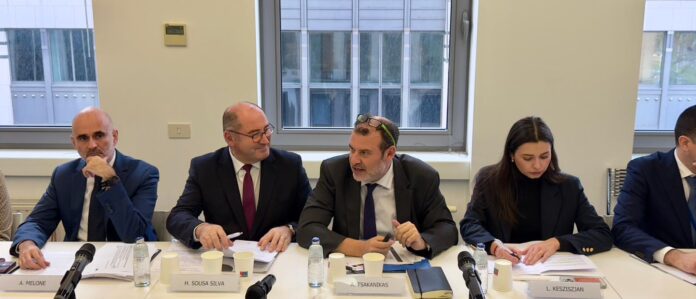
The conference also featured a panel discussion by Armando Melone, Policy Officer Access to finance at DG GROW, MEP Helder Sousa Silva (EPP) and Katinka Clausdatter Worsøe, Attaché for Digitalisation and Telecommunication at Danish Perm. Rep.

Following, a tour de table with reppresentantives from relavant stakeholder associations shared with the institutional discussants and the network the experience and perspectives from their sectors.

Thank you to all participants!

European Value Chains in Transition: Balancing Domestic Integration and External Linkages

0

Global value chains (GVCs) represent a foundational element of contemporary industrial organization and international competitiveness. For the European Union (EU), the ability to understand and strategically position itself within these networks is essential to advancing its core objectives of resilience, competitiveness, and strategic autonomy – principles now embedded in the EU’s new Competitiveness Compass.[1]

Unlike traditional trade, GVCs focus on the exchange of value-added (VA) for production purposes rather than the delivery of final goods. They outline the movement of intermediate inputs that traverse borders through a sequence of activities and tasks implemented in different economies, contributing to the creation of products that are, in effect, “made in the world.”

This newsletter presents selected empirical insights into the patterns of VA flows to and from the EU as a whole, with particular emphasis on the roles of the United States (US) and China as key trade partners and participants in EU value chains. The analysis draws on the GRinGVCs database[2], a novel dataset offering metrics and indicators that enable the mapping and monitoring of VA trade—the core dimension of GVCs—at both the sectoral level (2-digit NACE Rev.2 classification) and the country level, covering 76 global economies, including all 27 EU Member States.

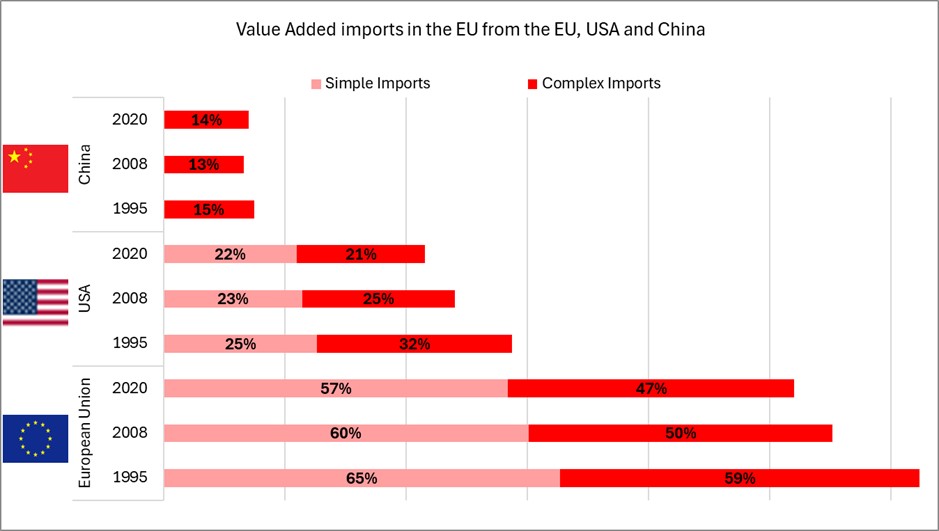
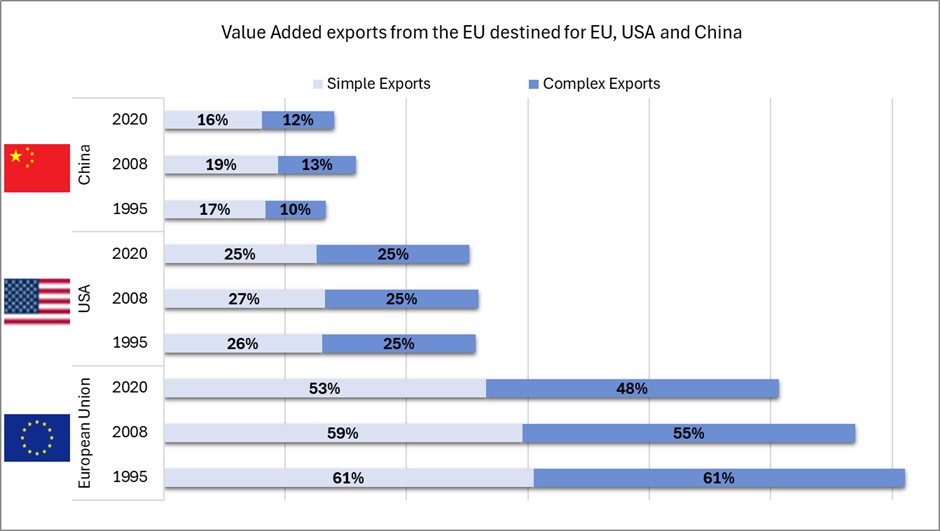
To illustrate these dynamics, we present two graphs in Figure 1, which depict EU inward (import) and outward (export) VA flows for the years 1995, 2008, and 2020. These flows are depicted as shares of the overall VA imports/exports in each year of reference, and encompass both intra-EU and extra-EU production networks—the former reflecting trade within the Single Market, and the latter capturing linkages with the US and China. The graphs distinguish between simple activities, defined as direct trade transactions where VA crosses borders for production purposes only one time, and complex activities, which involve VA crossing borders multiple times through successive production stages. [3]

(a) EU imports of VA

(b) EU imports of VA
Figure 1: Value-added (VA) imports (panel a) and exports (panel b) from and to the EU in 1995, 2008, and 2020. Trade partners include the EU (Single Market trade), the USA and China. Shares correspond to overall VA imports/exports per mode (simple and complex) of each economy over the three reference years.


Insights for the EU: Internal Integration as a Structural Asset

The EU is characterized by a high degree of internal interdependence. Intra-EU flows of VA consistently account for 50–60% of total transactions, underscoring the Single Market’s role as a deeply integrated production space. Major economies such as Germany, France, and Italy function as pivotal nodes, while smaller member states are also strongly embedded in these networks. This dense web of interconnections enhances the Union’s resilience but also raises questions about the balance between internal reliance and external diversification. The trend evolution depicted from 1995 to 2020 suggests a gradual outward orientation (i.e., lower intra-EU shares), reflecting the EU’s ambition to strengthen its global footprint while preserving the Single Market as its foundation.

Insights for the US: Diversification and Limited EU Dependence

The United States maintains a diversified portfolio of production linkages. Approximately one quarter of US value added flows involve the EU, indicating a moderate but stable level of interdependence. Stronger linkages exist with Canada and Mexico, as well as with Japan and China. A modest decline in EU-related flows in 2020 is consistent with US policy efforts to reduce external dependencies and reinforce domestic production capacity. For the EU, this underlines the importance of positioning itself as a reliable partner while recognizing the limits of its role within US-centered production networks.

Insights for China: Regional Anchoring and Productive Autonomy

China’s integration with the EU remains comparatively limited, with less than 20% of VA flows linked to the EU. Instead, China’s production system is anchored in East Asia, with significant interdependencies involving Japan, Korea, and Taiwan. At the same time, China demonstrates a strong orientation toward domestic self-sufficiency, with a substantial share of value added produced and consumed internally. This dual strategy of regional integration and productive autonomy presents both opportunities and constraints for the EU in deepening its engagement with China.

The evidence highlights the EU’s distinctive position: a highly integrated internal market that provides resilience and scale, but one that must also adapt to an evolving global environment. These messages are also transmitted through the Commission’s strategic documents, where strategic autonomy and the role of the EU has been central to the overall discussion regarding the rejuvenation of the Union’s competitiveness. To safeguard competitiveness and reduce vulnerabilities, the EU should:

  • Strengthen European value chains in critical sectors such as semiconductors, clean technologies, and health industries.
  • Promote cross-border industrial alliances that leverage the Single Market’s scale while fostering innovation capacity.
  • Advance diversification strategies to reduce over-reliance on any single external partner.

Strategic autonomy should be understood not as isolation, but as the capacity to act independently and effectively within a multipolar global economy. In this context, the EU’s role is pivotal as a leader in strategic and emerging value chains – both in competition and in cooperation with its major global partners. The Single Market remains the cornerstone of this ambition, providing the EU with the depth of integration and the scale necessary to materialize its global competitiveness aspirations.


[1] https://commission.europa.eu/topics/eu-competitiveness/competitiveness-compass_en

[2] The GRinGVCs database is a novel dataset developed within the framework of the project “GRinGVCs: Leveraging Global Value Chains for Innovation and Competitiveness – The Case of Greece”. The project was funded under Greece’s Recovery and Resilience Facility (RRF), as part of the “Greece 2.0” programme, through the Hellenic Foundation for Research and Innovation (HFRI/ΕΛΙΔΕΚ) (Project ID: HFRI-016667). It was implemented by the Laboratory of Industrial and Energy Economics (LIEE) at the National Technical University of Athens (NTUA), which serves as the Greek institutional member of the PromethEUs network. For more information and the database, see here.

[3] For example, in the case of EU complex exports to the US, VA originated from the EU has passed through multiple stages before reaching the US economy as a final production and consumption destination. On the other hand, EU complex imports from China imply that Chinese VA reached the EU as final destination after multiple preceding production stages.

The White Zones Procurement Failure: Portugal’s Stalled Broadband Program

0

A cautionary tale of how administrative inertia can derail public investment

Public infrastructure procurement reveals whether governments can convert ambition into results. Portugal’s stalled white-zones broadband tender, now in its third year without deployment, illustrates how well-intentioned programs can falter through institutional shortcomings rather than technical complexity.

A sound policy concept, on paper

In 2023, Portugal initiated a public tender to deploy fibre-optic infrastructure to over 400,000 underserved premises (TEK, 2023)[1]. The initiative targeted white zones, territories where market economics do not justify private investment without public subsidy, with an initial budget of €425 million. The funding sources combined EU structural funds with private sector co-investment from the winners of the tender, as first reported in November 2023 (Jornal de Negócios, 2023a)[2]. By December 2023, it was further indicated that the Government would complement the EU funds with national financing (XXXIII Government of Portugal, 2023)[3].

Despite Portugal’s strong overall fibre deployment, with 92.3% national coverage, rural areas lag significantly behind. As of mid-2023, only 68.7% of rural households had access to fibre-to-the-premises (FTTP), leaving nearly one-third of rural households without fibre connectivity (Omdia, 2024)[4]. This 23.6 percentage-point gap between urban and rural coverage underscored the need for public intervention to address market failure in low-density areas.

The policy rationale was sound: market failures in low-density areas justify public intervention to close connectivity gaps that feed regional inequality. The stated timeline envisioned 35 percent coverage by 2024-2025 and complete deployment by 2026-2027 (Dinheiro Vivo, 2023)[5].

When governance meets Brussels

In practice, the process stumbled early on. ANACOM published its white zones mapping in mid-2022, establishing the technical foundation for procurement (ANACOM, 2023)[6]. The tender process, launched by CCDR – Commission for Cohesion and Regional Development, immediately encountered obstacles during European Commission (EC) negotiations over state aid clearance (TEK, 2023)[7]. Minister Ana Abrunhosa described “almost a year of informal negotiations with the European Commission” and characterized the process as “an enormous bureaucratic burden” (RTP Notícias, 2023)[8]. The government revised launch targets from late 2022 to Q1 2023, which passed without tender publication (TEK, 2024)[9]. Only in November 2023 did the Council of Ministers approve the tender launch, which was followed by the official ceremony occurring in December 2023 (XXXIII Government of Portugal, 2023)[10].

Prime Minister António Costa described EC requirements as “an invitation to do nothing” while highlighting Portugal as first to complete premise-by-premise geocoding under the new regulatory framework (Jornal de Negócios, 2023b)[11]. According to the government’s official communication,

“António Costa sublinhou a dificuldade dos requisitos exigidos pela Comissão Europeia – nomeadamente a necessidade de referenciação da rede de fibra ótica casa a casa – , antes de destacar que Portugal foi o primeiro país da União Europeia a “conseguir realizar este trabalho”, pela mão do regulador do setor, a ANACOM.” (XXXIII Government of Portugal, 2023).[12]

[António Costa underlined the difficulty of the requirements demanded by the European Commission – namely the need for referencing of the fibre optic network house by house – , before highlighting that Portugal was the first country of the European Union to “manage to carry out this work”, through the sector’s regulator, ANACOM.]

Breakdown and drift

In 2024, the project faced major setbacks when errors in the tender documentation required corrections and the evaluation jury resigned (TEK, 2024)[13]. The government provided no official explanation for either fact (ECO, 2024)[14]. A replacement jury was appointed and, in July 2024, the expenditure of the white-zones tender was reduced, being reported as a public and private investment amounting to € 350 million. The new government described this as “reprogramming and rescheduling of expenditure” but offered no detailed explanation of whether this reflected scope reduction, specification changes, or funding-ratio adjustments (i online, 2024). [15]

By October 2024, three companies had submitted proposals (Público, 2024)[16]. A year later, no official adjudication had been announced, and no ground had been broken. The tender, in effect, entered administrative limbo.

What the failure reveals

The white-zones case exposes the absence of transparency: unexplained jury resignations, opaque budget adjustments and missing status updates erode accountability.

Portugal’s difficulty is not technological. The country has competent agencies, skilled engineers and adequate funds. What it lacks is a governance framework that insulates long-term projects from bureaucratic churn. Publishing procurement decisions in full would help identify the root causes of delays and administrative bottlenecks. And this transparency would enable testing of alternative delivery models to protect against administrative paralysis and ensure greater accountability.

Elsewhere, similar geographies tell a different story. Spain successfully rolled out subsidised rural broadband under comparable EU frameworks through its PEBA-NGA programme (European Commission, 2024)[17]. The programme was managed by the Secretary of State for Telecommunications, within the Ministry of Economic Affairs and Digital Transformation, achieving an increase in rural fibre-to-the-home coverage from only 11% in 2013 to 80% in 2023 (Lynthia, 2025[18]; Onivia and NAE, 2024[19]). Its success underscores that the obstacle in Portugal lies not in technology or funding, but in execution capacity.

After three years and €425 million committed (later revised to €350 million), without connecting a single household, the white-zones programme exposes a harsh truth: institutional dysfunction kills infrastructure projects faster than any funding shortfall or technical obstacle.

[1] TEK, 2023. Governo aprova lançamento do concurso público para fibra ótica que vai chegar a zonas brancas. https://tek.sapo.pt/noticias/telecomunicacoes/artigos/governo-aprova-lancamento-do-concurso-publico-para-fibra-otica-que-vai-chegar-a-zonas-brancas

[2] Jornal de Negócios, 2023a. Governo aprova concurso público internacional para instalar fibra ótica no interior. https://www.jornaldenegocios.pt/empresas/telecomunicacoes/detalhe/governo-aprova-concurso-publico-internacional-para-instalar-fibra-otica-no-interior

[3] XXXIII Government of Portugal, 2023. Está aberto o concurso para levar a fibra ótica a todo o país. https://www.portugal.gov.pt/pt/gc23/comunicacao/noticia?i=esta-aberto-o-concurso-para-levar-a-fibra-otica-a-todo-o-pais

[4] Omdia. (2024). Broadband Coverage in Europe 2023: Final Report. Report prepared for the European Commission. June 6, 2024.

[5] Dinheiro Vivo, 2023. Internet: concurso para a cobertura das ‘zonas brancas’ é anunciado e traz mais coesão social. https://dinheirovivo.dn.pt/internet-concurso-para-a-cobertura-das-zonas-brancas-e-anunciado-e-traz-mais-coesao-social-17488197.html

[6] ANACOM, 2023. Concurso para a cobertura de fibra ótica nas zonas brancas. https://anacom.pt/render.jsp?contentId=1751064

[7] TEK, 2023. Governo aprova lançamento do concurso público para fibra ótica que vai chegar a zonas brancas. https://tek.sapo.pt/noticias/telecomunicacoes/artigos/governo-aprova-lancamento-do-concurso-publico-para-fibra-otica-que-vai-chegar-a-zonas-brancas

[8] RTP Notícias, 2023. Concurso público internacional permitirá levar fibra ótica às ‘zonas brancas’. https://www.rtp.pt/noticias/economia/concurso-publico-internacional-permitira-levar-fibra-otica-as-zonas-brancas_n1519059

[9] TEK, 2024. Concurso das zonas brancas deve estar decidido até final do ano para levar Internet ao interior de Portugal https://tek.sapo.pt/noticias/telecomunicacoes/artigos/concurso-das-zonas-brancas-deve-estar-decidido-ate-final-do-ano-para-levar-internet-ao-interior-de-portugal

[10]XXXIII Government of Portugal, 2023. Está aberto o concurso para levar a fibra ótica a todo o país. https://www.portugal.gov.pt/pt/gc23/comunicacao/noticia?i=esta-aberto-o-concurso-para-levar-a-fibra-otica-a-todo-o-pais

[11] Jornal de Negócios, 2023b. Requisitos de Bruxelas para concurso das zonas brancas ‘são um convite a que nada se faça’, diz Costa. https://www.jornaldenegocios.pt/empresas/telecomunicacoes/detalhe/requisitos-de-bruxelas-para-concurso-das-zonas-brancas-sao-um-convite-a-que-nada-se-faca-diz-costa

[12] XXXIII Government of Portugal, 2023. Está aberto o concurso para levar a fibra ótica a todo o país. https://www.portugal.gov.pt/pt/gc23/comunicacao/noticia?i=esta-aberto-o-concurso-para-levar-a-fibra-otica-a-todo-o-pais

[13] Tek Notícias, 2024. Concurso das zonas brancas deve estar decidido até final do ano para levar Internet ao interior de Portugal. https://tek.sapo.pt/noticias/telecomunicacoes/artigos/concurso-das-zonas-brancas-deve-estar-decidido-ate-final-do-ano-para-levar-internet-ao-interior-de-portugal

[14] ECO, 2024. Renúncia do júri voltou a atrasar concurso para instalar fibra ótica no interior. https://eco.sapo.pt/2024/07/15/renuncia-do-juri-voltou-a-atrasar-concurso-para-instalar-fibra-otica-no-interior/

[15] i online, 2024. Governo aprova reprogramação da despesa do concurso para a cobertura das zonas sem internet. https://ionline.sapo.pt/2024/07/11/governo-aprova-reprogramacao-da-despesa-do-concurso-para-a-cobertura-das-zonas-sem-internet/

[16] Público, 2024. Espanhola Avatel disputa concurso de áreas brancas com Fastfiber e Dstelecom. https://www.publico.pt/2024/10/19/economia/noticia/espanhola-avatel-disputa-concurso-areas-brancas-fastfiber-dstelecom-2108421

[17] European Commission, 2024. Digital Connectivity in Spain. https://digital-strategy.ec.europa.eu/en/policies/digital-connectivity-spain

[18] Lyntia, 2025. PEBA-NGA Will Position Spain as the Country with the Most Extensive Fibre Optic Network in the Whole of Europe. https://www.lyntia.com/en/news/peba-nga-will-position-spain-as-the-country-with-the-most-extensive-fibre-optic-network-in-the-whole-of-europe/

[19] Onivia & NAE, 2024. Closing the Digital Gap: Spain’s FTTH Wholesale Market, https://onivia.net/wp-content/uploads/2024/10/221024-closing-the-digital-gap-onivia-nae.pdf

PromethEUs Workshop | Making the EU’s 2028–2034 Multiannual Financial Framework Work for Southern Europe

0
Multiannual Financial Framework

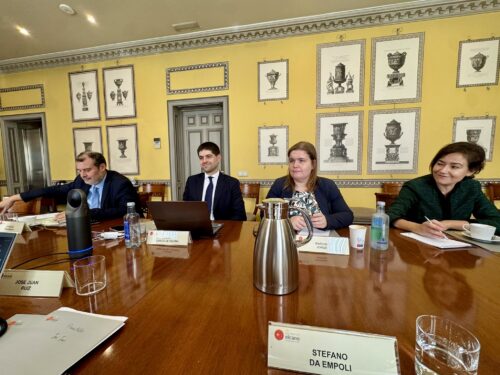
On behalf of the PromethEUs network, the Elcano Royal Institute organised the workshop “Making the EU’s 2028–2034 Multiannual Financial Framework Work for Southern Europe.”

The event took place on Wednesday, 22 October 2025, from 12:00 to 13:30 h CEST in Madrid and was hosted in a hybrid format.

About the event:

The conference provided an opportunity for the PromethEUs network to present and discuss preliminary findings, in view of the final report to be presented in Brussels in November, on the European Commission’s proposal for the 2028–2034 Multiannual Financial Framework (MFF) and its implications for Southern Europe. The meeting brought together representatives from public administrations, academia, industry associations, and think tanks from Spain, Portugal, Italy, and Greece.

Key topics included budget allocation in the new MFF, the European Competitiveness Fund, digital leadership, and the Horizon Europe programme.

Please find attached the programme of the event.

The fragility of our space infrastructure

0

Space infrastructure is becoming increasingly important for the functioning of society. From Global Navigation Satellite Systems (GNSS) — supporting transportation, agriculture, logistics and finance, and on which around 10 % of the EU economy depends[1]— to telecommunications, Earth observation and monitoring and different military uses. The rising demand for space infrastructure is revealed by the steep increase in the global number of objects launched into space, mainly driven by the US, and by Starlink in particular, from 221 in 2016 to 2895 in 2023[2].

The European Union has long been almost completely dependent on the United States in this sector, but it is slowly constructing its own infrastructure with projects such as GALILEO, IRIS2 and GOVSATCOM. Nevertheless, expanding the space fleet is not enough to guarantee independence and resilience, as it also increases the number of targets, and presumably vulnerabilities, for hostile actors.

Space is vulnerable

Recent incidents have shown that attacks on a space service can result in cascade effects, and seriously disrupt the functioning of civil and military services. A space infrastructure is complex and vulnerable in each segment – in space, on the ground, for users and human resources. Attackers can, for example, hijack a satellite, jam or spoof or intercept its signal, seize control of the ground control system through computer network exploitation, insert malicious components during manufacturing or physically destroy the satellite[3]. Attacks can be launched at any stage of the satellite’s lifecycle, which highlights the importance of rigorous practices in all sectors and segments.

The Viasat KA-SAT incident is emblematic. In February 2022, Russian actors first launched a denial‑of‑service attack against modems used by Ukrainian authorities, then exploited a misconfigured VPN appliance to deploy wiper malware that erased the devices’ hard drives, disconnecting them from the KA-SAT network and rendering them inoperable. Although the satellite itself was not hit, the episode underlines the threats present in every segment of the network[4]. Likewise, several times it has become evident how jamming navigation satellites is a prime objective for military and sabotage operations. For example, the flightradar24 platform provides an interesting map with the current interferences of the GNSS signal and it is evident how important this practice is in disputed territories and during conflicts.

Direct attacks on satellites are also possible. Security exercises have demonstrated that an adversary can commandeer on‑orbit assets [5], while many countries are currently experimenting with anti-satellite weapons (ASAT)[6] to physically take them down.

Policy measures

Mitigation measures range from stronger encryption and anti‑jamming techniques to information‑sharing frameworks, “security‑by‑design/default” standards and tighter supply‑chain supervision [7]. However, what matters is the knowledge that no system is completely secure and that humans still represent a key weakness in every IT system. Therefore, a skilled workforce is essential, especially as the threat landscape evolves.  Thus, the European Union Agency for Cybersecurity (ENISA) has published a repository complete with many resources in the context of its Space Threats report.

The European Commission has recently stepped up its space-sector cybersecurity approach with a series of dedicated measures and communications centred around the EU Space Strategy for Security and Defence, adopted in 2023. The most important piece of legislation is currently the NIS2 Directive (2022), which classifies space as a critical sector and imposes common cybersecurity rules, particularly on supply‑chain security. A specific Space Act is also expected for late 2025, underlining the importance that the topic is gaining in the political landscape.

Nevertheless, while some discussion on the topic exists, it is confined to a few technical circles. A fundamental step that must now be taken is to make European citizens aware of how fragile the infrastructure which they critically depend on is.

[1] According to the European Commission. https://defence-industry-space.ec.europa.eu/eu-space/galileo-satellite-navigation_en

[2] United Nations Office for Outer Space Affairs (2025) – with major processing by Our World in Data, https://ourworldindata.org/grapher/yearly-number-of-objects-launched-into-outer-space

[3] For more and detailed information about space threats: ENISA Space Threat Landscape 2025 https://www.enisa.europa.eu/publications/enisa-space-threat-landscape-2025

[4] For a complete report on the attack: https://www.espi.or.at/wp-content/uploads/2022/10/ESPI-Short-1-Final-Report.pdf

[5] https://therecord.media/space-cybersecurity-satellite-hacked-esa-thales

[6] The Indian ASAT test is iconic. https://carnegieendowment.org/research/2019/04/indias-asat-test-an-incomplete-success?lang=en  and https://www.space.com/india-anti-satellite-test-significance.html

[7] As suggested by ENISA https://www.enisa.europa.eu/news/from-cyber-to-outer-space-a-guide-to-securing-commercial-satellite-operations

Addressing Vulnerabilities in the EU’s Semiconductor Value Chain

0

Semiconductors are a backbone in the European Union’s (EU) quest for digital sovereignty and technological leadership. To achieve these ambitious goals, the EU must confront and eventually address critical vulnerabilities in the sector’s value chain. This value chain is quite complex and interrelated with others, as chips are integral components that power industries from automotive and healthcare to defense and artificial intelligence. Yet, it faces critical pressures stemming from concentrated production, raw-material shortages, fragmented regulation and limited supply-chain visibility, all of which amplify Europe’s exposure to supply disruptions and threaten its innovation capacity.

Drawing inspiration from the recent PromethEUs publication focus on Policy Strategies for Semiconductors and Quantum Technologies and comprehensive research from the European Commission’s (EC) Joint Research Center (JRC)[1], this briefing examines five (5) critical vulnerability dimensions and discusses policy levers under the European Chips Act, the Competitiveness Compass, and the Clean Industrial Deal that can be used (or are currently in use) to address them.

  • Geographic Dependencies and Production Concentration

Europe accounts for less than 10% of global semiconductor fabrication capacity, with over 75% of advanced node (<10 nm) production concentrated in Taiwan and South Korea, in national champions such as TSMC and Samsung. What is more, nearly 80% of EU-based input suppliers and 63% of their customers lie outside the EU. This critical interdependency magnifies exposure to geopolitical tensions, natural disasters, tariffs, and other supply chain disruptions. To address this, the European Chips Act targets a 20% market share by 2030 through grants for Integrated Production Facilities (IPFs) and incentives for Open EU Foundries (OEFs)[2], underpinned by coordinated national roadmaps and strategic equity stakes by public authorities.[3]

  • Critical materials and other intermediate input bottlenecks

Semiconductor manufacturers depend on a narrow suite of critical materials, gallium, germanium, indium, and rare earth metals, over 90% of which are sourced from China.1 But this is not the only dependency case that is worrying. Equally concerning is the reliance on non-EU suppliers for high-purity silicon wafers, photoresists, and advanced packaging substrates. This means that potential disruptions in these upstream stages can have cascading effects in downstream fabrication and assembly stages, rendering them quite sensitive. Building on the Critical Raw Materials Act[4], the Competitiveness Compass recommends establishing joint strategic stockpiles, joint procurement, and targeted R&D for substitute materials that could shield production requirements from shortages and effectively address autonomy issues in the entire supply chain.[5]

  • Resource Constraints for Energy and Water

Using TMSC data, Cerutti and Nardo reported for the JRC that a chip manufacturing facility can consume up to 200,000 tons of water per day and reach up to 19.2 TWh of electricity consumption annually. [6] This means that water-scarce regions and overloaded power grids (particularly relevant for Southern EU member states during the summer) can risk production interruptions that result in millions of EUR losses. The Clean Industrial Deal[7] is a suitable lever for mitigating these pressures, as it promotes on-site renewable energy integration, water-recycling mandates, and electrification subsidies that can go hand in hand with the development of chip factories.

  • Regulatory Fragmentation and Investment Barriers

Divergent environmental-permit regimes, land-use restrictions, and safety standards across member states prolong production facility approvals and create the usual EU-wide red-tape constraints that erode Europe’s attractiveness for greenfield investment in chips manufacturing.[8] The Chips Act Pillar II and the new Omnibus Simplification Package[9] can help alleviate some of this constraints, as they call for mutual recognition of national permits across the EU and propose  fast-track environmental approvals for strategic projects.

  • Supply-Chain Transparency and Crisis Monitoring

Dependency analyses for raw materials and intermediate inputs typically rely on trade statistics that capture bilateral volumes and values. Yet, goods often pass through multiple export and re-export stages before reaching their final destination. This implies that direct trade flows cannot fully capture vulnerabilities, as they place significant focus on higher-tier suppliers and thus underestimate the true extent of EU dependencies. Furthermore, limited visibility and monitoring of lower tier suppliers in the semiconductor value chain can significantly impede early detection of disruptions. Under Pillar III of the Chips Act, the JRC has developed the SCAN (Supply Chain Alert Notification) system, combining structural indicators (e.g., market concentration, trade dependencies) with high-frequency signals (price spikes, volume drops) to flag upstream distress and input shortages and also evaluate the EU’s exposure to non-EU partners for key imported products traded within the semiconductor value chain.[10]

[1] Cerutti, I. and Nardo, M. (2023) Semiconductors in the EU: State of play, future trends and vulnerabilities of the semiconductor supply chain. Luxembourg: Publications Office of the European Union. doi:10.2760/038299.  Available at: https://publications.jrc.ec.europa.eu/repository/handle/JRC133850

[2] OEFs are “first-of-a-kind” semiconductor manufacturing facilities in the EU -either front-end, back-end, or both-that offer production capacity to unrelated undertakings, i.e., produce chips for other industrial partners and not for their own use, thereby bolstering the Union’s security of supply. Once granted OEF status under Pillar II of the European Chips Act, these facilities benefit from streamlined permitting, priority access to pilot lines, coordinated state-aid support, and, in crisis situations, an obligation to prioritize orders for essential products.

[3] https://commission.europa.eu/strategy-and-policy/priorities-2019-2024/europe-fit-digital-age/european-chips-act_en

[4] https://single-market-economy.ec.europa.eu/sectors/raw-materials/areas-specific-interest/critical-raw-materials/critical-raw-materials-act_en

[5] COM(2025) 30 final

[6] For perspective, this equates approximately 1% of the EUs entire electricity generation in 2022.

[7] COM(2025) 85 final

[8] European Parliament (2022) Briefing: Strengthening EU Chip Capabilities. Brussels: European Parliamentary Research Service. Available at: https://www.europarl.europa.eu/RegData/etudes/BRIE/2022/733585/EPRS_BRI(2022)733585_EN.pdf

[9] https://single-market-economy.ec.europa.eu/publications/omnibus-iv_en

[10] Molnár, J., Nardo, M. and Zaurino, E. (2024) A methodological toolbox to monitor the semiconductors’ supply-chain. Luxembourg: Publications Office of the European Union. doi:10.2760/5085463. Available at: https://publications.jrc.ec.europa.eu/repository/handle/JRC138921

The Bet for Supercomputing in Southern Europe

0

The European Union is advancing its competitiveness and innovation capacity through the creation of AI Factories and AI Gigafactories, designed to support the development and training of Europe’s complex AI models. The four Southern European countries in the PromethEUs group (Spain, Portugal, Italy, and Greece) are hosting or participating in some of the first factories launched under the EU’s Digital Europe Programme and EuroHPC initiatives.

Building large-scale infrastructure is the first step, but past European tech cycles show that hardware alone does not guarantee competitiveness. The real impact comes when this power is embedded across companies, labs, and public institutions. High Performance Computing (HPC) needs to be integrated within the wider economic fabric.

What Are AI Factories and Gigafactories?

AI Factories are computing and data hubs embedded in Europe’s most powerful supercomputers. Their function is to provide compute power, datasets, and technical assistance for startups, companies, researchers, and public administrations. The design is to allow different sectors to experiment with AI without outsourcing compute or depending on foreign platforms.

AI Gigafactories are still in planning. The European Commission has expressed 67 expressions of interest from 16 EU countries. A gigafactory’s purpose is to consolidate the compute capacity required for large foundation models, installing over 100,000 GPUs per facility and enabling training workloads that until now are only feasible in the US or China. They are significantly more expensive: the European Commission aims to fund them through blended financing mechanisms under InvestEU and InvestAI, with around €20 billion earmarked to support up to five AI Gigafactories, as part of a broader €200 billion investment goal for European AI.

Southern Europe’s Compute Capacity and its Deployment

Spain now hosts one of the EU’s top-tier supercomputers, MareNostrum5, and co-leads one of the first AI Factories in Europe.

Portugal has launched Deucalion (a national supercomputer in Guimarães) and is formally linked to the Barcelona AI Factory through a shared interface.

Italy is hosting the AI Factory at the Bologna Technopole, built around the Leonardo supercomputer, one of the five fastest in the world.

Greece, through the GRNET center in Athens, is setting up the Pharos AI Factory.

These are important infrastructure projects, but compute on its own is not enough. One of Europe’s main assets is its entrepreneurial and industrial fabric. If AI is to be developed and deployed in line with European priorities, it must be integrated into this fabric.

A more relevant indicator than infrastructure is the actual use of AI by enterprises. The new investments in compute infrastructure need to be deeply integrated within Europe’s industrial fabric, so that AI innovation comes from companies and labs that are working closely with the AI factories and gigafactories.

Two Challenges: Capital and Services

We are in the early phase of a technological revolution: focused on building infrastructure and testing the capabilities of new systems. The creation of AI Factories and Gigafactories fits squarely within this phase. However, the competitive advantage is gained when that capacity is broadly accessible and systematically used across the economy.

The challenge ahead is making sure that a wider range of European actors can participate in the development of advanced AI systems, experiment with foundation models, and shape applications at the technological frontier. This requires a more deliberate effort to connect infrastructure with talent, regulatory clarity, and long-term funding instruments.

  1. Stable private and public investment

Advancing into the next phase requires stable investment flows throughout the innovation cycle, which would include funding in all stages: exploratory R&D, deployment and scale. In 2023, AI startups in the EU raised around €8 billion, compared to nearly €60 billion in the United States. Within Europe, Southern countries remain significantly underfunded, with limited access to growth capital for deep tech ventures.

In order to make the new or existing funding mechanisms effective (InvestAI, Horizon Europe, EIB), national governments will need to act as co-investors, helping to de-risk frontier research, support testing environments, and accelerate private sector involvement.

  1. Infrastructure Needs a Services Layer to Deliver Value

A Gigafactory with 100,000 high-end chips does not guarantee that companies or labs will build advanced AI. What connects compute to the economy is the services layer:

  • User interfaces that simplify access so teams with different technical levels can work without friction.
  • Scheduling systems that distribute workloads efficiently, preventing long queues and maximizing use.
  • Data tools to manage and move large or sensitive datasets across projects safely.
  • Technical support teams that help smaller firms integrate their data and workflows.

The risk is building the hardware first and figuring out these systems later. Ideally, services and infrastructure should be designed together so everything is aligned from the start.


References:

Dealroom. (2025). Startups backed by the EU’s Framework Programmes. https://dealroom.co/reports/startups-backed-by-the-eus-framework-programmes

European Commission. (2024). AI factories under the Digital Europe Programme. https://digital-strategy.ec.europa.eu/en/policies/ai-factories

Eurostat. (2025). Usage of AI technologies increasing in EU enterprises. https://ec.europa.eu/eurostat/web/products-eurostat-news/w/ddn-20250123-3

Perez, C. (2002). Technological revolutions and financial capital: The dynamics of bubbles and golden ages. Edward Elgar.

STEP: Innovation Platform or Bureaucratic Labyrinth?

0

The European Union faces a pivotal moment. Geopolitical instability, energy challenges, global tech rivalry, and ambitious climate goals, call for a bold investment strategy in innovation and technological autonomy. The STEP initiative (Strategic Technologies for Europe Platform) emerged as the political solution. It aimed to combine efforts, bolster key technologies, and solidify European leadership in advanced fields like deep tech, clean energy, and biotech. Yet, despite the substantial pledges and anticipation surrounding it, realizing this endeavor proves challenging. Stakeholders and companies are discovering that European innovation isn’t just hindered by funding shortages, but also by a dysfunctional, overly complex administrative system.

The Strategic Technologies for Europe Platform (STEP) isn’t a novel financial instrument. It aims to expand on eleven existing EU programs, like Horizon Europe, Digital Europe, the Innovation Fund, InvestEU, EU4Health, and the Structural Funds. This strategy was presented as a “smart” way to use existing resources. However, in reality, it increases complexity. Each program has its own rules, eligibility requirements, assessment processes, and timelines. The Commission has issued numerous guidance materials, hoping to offer practical advice and explanations. Despite the aim of assisting applicants, the outcome is an overwhelming amount of guidelines, rules, webinars, briefings, and interpretations that cause more confusion than clarity.

This complex approach wasn’t chosen by chance. It reflects the EU’s ingrained culture of “compromise and coexistence,” where political objectives must often accommodate established frameworks and existing structures. Rather than establishing a fresh, flexible mechanism with a centralized authority, existing financial tools were favored to avoid upsetting institutional dynamics and national jurisdictions. The consequence is an institutional disarray, where numerous unrelated procedures, lacking unified planning, operate simultaneously but lack coordination.

Consider how a typical project seeks funding through STEP. The beneficiary first submits a proposal, aiming for the STEP Seal – the “Seal of Sovereignty” – which acknowledges the project’s strategic importance. This seal in theory is supposed to unlock various funding streams. Yet, in reality, it offers no guarantees. The project then undergoes a complete assessment by the relevant program, based on its particular guidelines. There isn’t a single process, nor is there automatic approval. Instead, there is a duplication of processes, overlaps, and unclear responsibilities.

The interval from the initial request (call of proposals) to the project’s complete funding can exceed eighteen months. This timeframe is extended by the need to adjust national or regional Operational Programmes to include STEP initiatives. Due to this cumbersome and time-consuming process, even the most promising project proposals risk getting bogged down in red tape before they can even begin.

Unlike Europe’s approach, significant competitor economies like the US and China have embraced more centralized and strategic approaches. The U.S. CHIPS Act, for instance, used straightforward processes and central management, facilitating swift private investments. Similarly, China utilizes targeted state support, focusing on strategic projects with a technological and geopolitical dimension. Conversely, the EU’s approach is fragmented, which wastes valuable time.

While communications have been made, access to STEP for small and medium-sized businesses is severely restricted. Unofficial remarks from interested parties suggest that the administrative and technical hurdles deter numerous SMEs from participating. STEP appears to mainly benefit organisations with prior experience in European programs, equipped with specialized personnel and the means for legal and technical assistance. In other words, it favors a select few.

Limited access to STEP pojects, exacerbates current regional economic and social disparities.  Countries and regions with weak national or local innovation support systems are having difficulties in participating. Consequently, rather than fostering convergence through Cohesion Support Funds, STEP could widen the divide between established and emerging innovation ecosystems.

Initial assessments, though lacking by full quantitative data, are disappointing. The effectiveness of the STEP Seal grant is less than anticipated. The mechanism’s success is implicitly doubted, even by even by executives of the managing authorities themselves.

The most concerning aspect is that STEP, despite being presented as an innovation, mirrors the pathogenic traits of European bureaucracy: fragmentation, unclear responsibilities, conflicting rules, and a complex multi-layered system. It’s not surprising that over a dozen European Commission departments are involved. Its legal framework references at least eleven distinct regulations and directives. The STEP mechanism functions as a broad network, yet it lacks central management or organization. This lack of a clear political structure and loose architecture, undermines the instrument’s effectiveness.

What alternatives exist? There are good practices within the EU that can be used as strong examples. The EIC Accelerator, for instance, has built a largely consistent system for choosing and overseeing cutting-edge SMEs, gaining global recognition. Likewise, the InvestEU Platform has established a streamlined way ‘single entry point’ to access funding via the EIB and national banks. Combining procedures, implementing unified assessments, and building “one-stop-shop” digital platforms might be vital elements for a revamped STEP strategy.

In an environment where fierce tech rivalry worldwide is breathtaking, speed is crucial. Each month lost or even delayed means lost opportunities, less competitiveness, wasted investments. STEP, rather than speeding things up, slows them down. Rather than simplifying, it complicates.  Instead of strengthening the single market, it reproduces its national and administrative wall boundaries.

If the European Union is to truly foster innovation, technological independence, and competitiveness, it must fundamentally rethink its financial mechanism design and execution. The solution isn’t just more guidelines, but a significant simplification of regulations, a streamlined evaluation process, and direct financial aid with a single point of contact for recipients.

STEP serves as a reminder that good intentions alone are not enough.

Ambitious visions must be matched by institutional clarity and operational effectiveness. Europe’s technological future hinges not on declarations, but on execution. In this decisive moment, what is needed is not only a common strategy, but also a collective self-awareness. We must dare to acknowledge the problems and respond with pragmatism. If the Union aims to lead globally, it must approach thinking, planning, and action with the same agility and determination that it requires of the very innovations it wants to finance. Otherwise, initiatives like the STEP platform will become another well-intended endeavor, trapped in the gears of European bureaucracy.

Konstantinos Kokkinoplitis is Founder and Director of Seven Sigma P.C. and RISE, and a former Secretary General for Research and Technology in Greece

https://www.linkedin.com/in/constantinos-kokkinoplitis-90a33158/


Reflections from the PromethEUs Workshop in Lisbon, 24 June 2025

0

On 24 June 2025, the Institute of Public Policy – Lisbon (IPP), in cooperation with the PromethEUs network and with the support of Google, hosted a closed-door workshop entitled “Simplify to Compete: Rethinking EU Regulation for a Digital Future”. The event took place at ISEG – Lisbon School of Economics & Management and brought together a select group of European policymakers, researchers, and public policy experts to examine the role of regulatory simplification in fostering innovation, digital transformation, and economic competitiveness across the European Union.

This workshop forms part of an ongoing series of policy dialogues coordinated by PromethEUs—a network of Southern European think tanks dedicated to promoting digital transformation and EU integration from a competitiveness perspective. The Lisbon event preceded the formal launch of the associated policy report, which will be presented at the European Parliament in Brussels on 2 July 2025.

Framing the Debate: Why Simplification Matters

The workshop responded to a growing consensus within European institutions that regulatory complexity may be undermining the Union’s ability to respond effectively to fast-paced technological change, global competition, and strategic industrial challenges. As such, simplification is no longer viewed solely as an administrative goal, but as a strategic imperative tied to Europe’s competitiveness and digital sovereignty.

Opening remarks from the IPP and ISEG leadership framed the discussion around two central questions:

  • How can the EU regulatory environment be made more coherent and responsive to digital innovation?
  • What institutional, legal, and political tools can be leveraged to reduce fragmentation and promote investment?

Panel I – Presenting the Report: Four Pillars of Reform

The first panel of the workshop was dedicated to the presentation of the draft policy report, which comprises four thematic chapters:

  1. Streamlining Digital Regulation in the EU

Stefano da Empoli (I-Com, Italy)examined recent efforts to simplify EU legislation, such as the “one-in, one-out” principle and omnibus simplification packages. He placed emphasis  on the need for regulatory interoperability across Member States and the risks of asymmetrical regulatory burdens between small and large firms and underlined that simplification must not be confused with deregulation, and that clarity, coherence, and adaptability are the true goals.

  1. Lessons from Portugal’s SIMPLEX Programme

Steffen Hoernig (IPP and Nova SBE, Portugal) presented insights from Portugal’s acclaimed SIMPLEX programme, a long-standing administrative modernisation initiative. He highlighted five lessons that could inform future EU-wide initiatives, including the proposed “28th legal regime”:

  • Avoid digitalising existing complexity;
  • Align legal simplification with digital infrastructure;
  • Engage stakeholders through bottom-up consultation;
  • Ensure legal adaptability through feedback loops;
  • Evaluate implementation and outcomes systematically.

SIMPLEX was showcased as a case of political continuity, effective coordination, and stakeholder engagement—critical elements in making regulatory reform sustainable.

  1. Artificial Intelligence and Europe’s Digital Strategy

Darío García de Viedma (Royal Elcano Institute, Spain)  examined the multi-layered approach the EU has taken towards AI: from regulation (AI Act), to coordination (national plans), institutionalisation (European AI Office), and competitiveness (AI investment strategy). He diagnosed the “southern asymmetry” in venture capital investment across Europe, especially in countries such as Portugal, Greece, and Spain, and proposed measures to bridge the gap between public R&D support and private sector scale-up capacity.

  1. Industrial Policy: Semiconductors and Quantum Technologies

Aggelos Tsakanikas (LIEE, Greece) discussed the strategic importance of securing European leadership in critical technologies, focusing on the EU Chips Act and quantum research frameworks. Challenges identified include supply chain dependencies, talent shortages, and slow implementation at industrial scale. He called for closer alignment between regulatory policy, the green transition, and innovation funding under the EU’s competitiveness agenda.

Panel II – Roundtable Discussion: Challenges and Opportunities

The second part of the workshop featured a moderated roundtable under the Chatham House Rule, allowing for a frank and constructive exchange of views. Participants addressed several key questions:

  • Why have so many EU-level simplification initiatives failed to deliver substantial results?
  • How can Member States contribute to a more harmonised but flexible regulatory space?
  • What are the risks of widening inequalities between digitally advanced and lagging regions?
  • How should the EU balance regulatory ambition with administrative feasibility?

Speakers stressed that overproduction of complex legislation, fragmented implementation, and lack of ex post evaluation continue to hamper effective simplification. Several interventions highlighted the need for political incentives that reward quality over quantity in the EU legislative process. Others advocated for stronger collaboration between the European Commission, Member States, and local administrations to co-design and test simplified regimes.

Portugal’s SIMPLEX was repeatedly cited as a rare example of political continuity across governments and an institutional culture of listening to citizens and businesses. Participants also acknowledged the limitations of one-size-fits-all approaches and called for flexible instruments, such as opt-in regimes, to accommodate the diversity of Member States.

Conclusion and Next Steps

The workshop closed with a strong sense of purpose and mutual understanding of the complexities involved in regulatory reform. There was broad agreement that simplification is not a purely legal or technical matter, but a deeply political and institutional process that requires long-term vision, coordination, and trust-building.

PromethEUs will continue its mission to inform the EU policy agenda through evidence-based dialogue, regional cooperation, and forward-looking proposals in the digital and competitiveness domains.